Friday, 18 July 2014

Planet of Trust

The story of Dawn of the Planet of the Apes pivots on trust: can two tribes (humans and apes) learn to trust each other enough to prevent war... or not. Anyone who knows the whole story (and I can still remember the moment when Charlton Heston rides along the beach - which I saw more than 45 years ago), will know which way the story goes. Nonetheless, the narrative is gripping and leaves you pondering on the real conflicts of the world.

Of course, you can simply be amazed by the quality of the special effects and the digital make-up worn by the apes: it is breathtaking. Andy Serkis probably won't but would deserve an Oscar for his portrayal of Caesar. And this is a spectacular film with excellent cinematography. It won't be everyone's cup of tea. But it is a very worthy film.


Some leaders appear to think that trust is like a tap that can be turned on or off. Whereas in truth, I think, trust is something as fragile as butterfly's wing, is earned by (not to be expected as a result of) assiduous and ethically consistent behaviour, and exists in the minds of those who trust.

It has been my experience that most people want to trust their leaders and look for opportunities to do so. Which means, I think, that most people are reasonably forgiving when a leader takes a decision that appears at odds with wider plans. But there are decisions from which there is no going back and trust if not destroyed forever, is lost for a very long time. The art of being a good leader is knowing when you are at risk of crossing the line and making one of those latter decisions. It is then a question of finding another path (or not of course).

What have you done recently that might have come close to that line? 

_____________

This is the thirty ninth of my 2014 series of blogs about leadership ideas to be found in the movies of our time. You can read here as why I am doing this. Please subscribe to this blog if you want to read more. Thanks. Click the label 'film' to see all the others.

Voluptuous panic

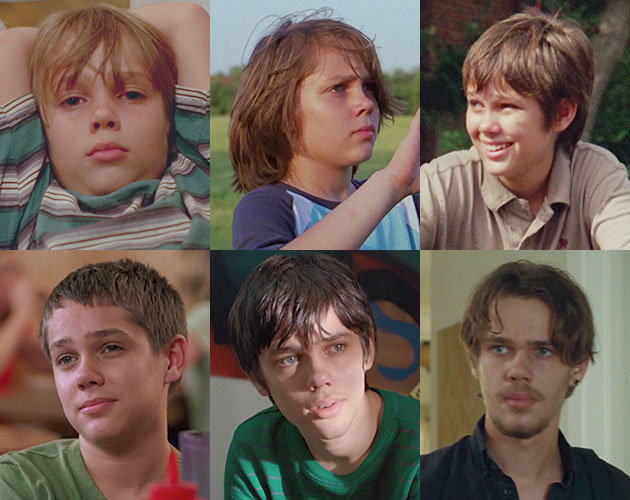
Some films transport you to different worlds and places - essentially taking you out of yourself. Some films get under your skin and bury deep into your heart - taking you into yourself. Boyhood is a film of the latter kind. Watching a boy grow up (and his family change around him) compels you to mull on your own childhood. And if you are are Dad like me, on your own fatherhood too. Indeed the word that sums this film up is: compelling.

Some of the acting felt a little bit stiff and if you are hoping for some great storyline, there isn't one. Instead we observe the kinds of events that shape all of our lives: the humdrum, the awkward, the occasionally dramatic and achingly poignant. All are momentous and yet all are ordinary. Just go with the flow and go see this movie: it will stay with you for a very long time. (And watch out for the line that talks of voluptuous panic!)


Leaders never stop growing up. If you think you have leadership sorted, it will be because you don't have it sorted. Leadership is about learning: nothing more, nothing less. I am told that sharks die if they stop moving. It is the same for leaders: stop growing, stop learning, stop reflecting and you may just as well stop.

Recently I was fortunate enough to receive some impromptu coaching from someone I trust and have great confidence in. Over some damn fine coffee, she asked me some damn fine questions. And I changed: made a critical decision and reframed what I am spending my time doing. It felt like a load had been lifted from my shoulders (and still does). At any moment (and good coaching helps), this can happen to any of us. We keep on moving, changing, growing and developing.

Perhaps there is a sequel to this film that may have already begun: called 'Adulthood'??

What moments from your childhood would you put on film? (Why?)

_____________

This is the thirty eighth of my 2014 series of blogs about leadership ideas to be found in the movies of our time. You can read here as why I am doing this. Please subscribe to this blog if you want to read more. Thanks. Click the label 'film' to see all the others.
Saturday, 12 July 2014

Again & again!

Begin Again is one of those very rare movies that having seen, you will want to see again. I did. I would have quite happily walked straight back into the cinema and watched it once more. This is a delightful, charming, transcendental film with a sound track to die for. It is like watching a woodland brook bubble and glide over shimmering stones. There is a main narrative but surrounded by small eddies & whirlpools of sub plots which could have spun off into stories of themselves.

The acting is authentic and passionate: as naturalistic as many of the best films of France. I have no idea what Kiera Knightley & Mark Ruffalo are like in real life, but they just seem to inhabit their roles. Indeed, all the acting is magnetic & bright eyed: the performances draw you in. This is a powerful film that you simply must go and see.


This is story about doing what is right for you: not being persuaded to sell out, compromise or just fit in. In this respect, it is awkward movie that should (if you let it) make you wonder if you have, perhaps, lost some connection with the dreams you began with.

The hardest part of being a leader is truly knowing what is your 'thing', your 'bag', your 'cri de coeur', your passion / focus / aim / ambition... (whatever you want to call it). What will you not give up? What are you at risk of giving up? What have you given up so far but could find again? What have you lost forever?

If you want to lead people: you have to know the answers to these questions.

_____________

This is the thirty seventh of my 2014 series of blogs about leadership ideas to be found in the movies of our time. You can read here as why I am doing this. Please subscribe to this blog if you want to read more. Thanks. Click the label 'film' to see all the others.

Monday, 7 July 2014

What makes a Mâch~iâ~velliân whistle blowing leader?

Machiavelli, not one to mince words, wrote:
A prince must therefore always seek advice… he must always be a constant questioner, and he must listen patiently to the truth regarding what he has inquired about, moreover if he finds that anyone for some reason holds the truth back he must show his wrath. (from 'The Prince' Penguin Classics publication translated by George Bull, 1981)
If he hadn't have been the world's first public sector management consultant, Machiavelli would have been a whistleblower. Truth was very important to him. Wise & grounded leaders still regard truth as an essential ingredient in running any organisation successfully. Only unwise leaders want to surround themselves with people who offer only sanitised versions of the truth.

And so it is that remarkable leaders take action to encourage whistleblowing. This of course is not what happened to James Patrick, whose story is now well known. But if you have not seen it, I commend this short video interview of him by the Cliff Caswell, editor of Police Oracle. But other leaders can and should do different. But what needs to be put in place?

There is some useful guidance here: Whistleblowing arrangements: Code of practice (PAS 1998:2008) which includes a useful checklist. The Public Concern At Work website is a rich source of information and case studies as well.

But all this got me to thinking, what would I expect of a leader who not only claims to be supportive of whistleblowing (as many do) but who is, in fact, supportive of it. In my opinion, such a leader would:
  • Evidence an ability to listen and act upon information provided via whistleblowing
  • Understand and be able to explain in straightforward terms, the difference between grievances and whistleblowing - and when they need to be invoked
  • Be able to give examples of where whistleblowing has made a positive difference to the services being provided to the public
  • Be able to counter convincingly (the oft repeated accusations) that those who whistleblow usually end up outside the organisation or being passed over for promotion (etc.)
  • Put in place sufficient resources (such as a helpline and more) to allow confidential whistleblowing to occur
  • Be clear that whistleblowing rights are extended to all, including contractors
  • Sponsor and help shape an effective communications strategy that reaches into every nook and crevice of the organisation, so that everyone knows about how they can whistleblow
  • See how whistleblowing connects with organisational improvement, reputation management, social media & comms policies and leadership development
  • Challenge other leaders who may have bought the T-shirt but are not quite wearing it yet!
  • Review progress and test whether whistleblowing is happening as it should
  • Be whistleblowers themselves (should the need arise) and have the capability and commitment to speak truth unto power
  • Show even more ability just to listen... (and learn and act...)
There is probably more (what would you add?).

But how do you measure up?

Friday, 4 July 2014

Dancing on sunshine

I spent the first half an hour watching Walking on Sunshine wondering how I would improve the film. Some films just work from the off, while others... um... don't. Some musical movies segue from one song to another effortlessly and convincingly. This film doesn't. Instead 80's hits are shoehorned in to what is essentially a cup cake of movie.

The acting is uninspiring, the sets just a bit too twee (I wonder if the Pula tourism authority paid for a lot of this film!?) and the narrative is about as substantial as candyfloss. What can I say? Go see this movie if you are still living the dream of 80's and addicted to all romcom films. If not, there are better films around.


At one point in the movie, one of the characters says that perhaps she is in love with love. This got me thinking about whether some leaders are in love with leadership rather than the results they are achieving. I finally got around to watching Into the Wild the other day (my son has been saying I should see this for a while) and a) it is a 1000 times better than Walking on Sunshine and b) it too carries a similar message: happiness is only real when it is shared.

Leadership is not a thing in itself. It is a always a means to an end. And than end is a result worth having: a change to the world that is valuable to more people that just the leader her/himself.

For whom do you practice your leadership?

_____________

This is the thirty sixth of my new series of blogs about leadership ideas to be found in the movies of our time. You can read here as why I am doing this. Please subscribe to this blog if you want to read more. Thanks. Click the label 'film' to see all the others.

Saturday, 28 June 2014

If not engagement then what?

Yesterday was also good day: I spent more time at the Policing Social Citizens conference (see previous post below) in Manchester in the company of an awesome mix of great people. We were told that just before John Grieve left, he had told one of the organisers that there was more intelligence and insight in the room than at a typical ACPO conference! A most charming man and his presentation was certainly one of the highlights of yesterday.

Challenged by Royston Martis (via twitter) to come up with a better word than 'engagement', I convened a workshop entitled "If we are not going to use the word engagement, what should we use and do?" This is a report of that workshop, ably helped by Sue Ritchie who kept flipchart notes. As you might expect, the conversation ranged quite widely!

I will begin with one police officer's story who said he was once walking down the road on his patch and one his (dare we call him) 'customers' came up to him and said, with a wry grin "Are you engaging with me or reassuring me today?" Now we all know how the great unwashed British public have this irritating habit of raising an eyebrow (and sometimes more) to our carefully contrived words / concepts of the moment. And this doesn't necessarily negate the value of some words. However in this particular instance, I think we may have to listen and reframe...

So what else was raised in the meeting. Here is in a fairly random order are some reflections on the discussion and points raised (with thanks to all who came along):
  • Is it essentially about a model where the police service is the vehicle, the public are in the driving seat and the gears that connect the driver to the engine and wheels is where the 'engagement' happens. In other words, are we really talking about is the public not only participating in but leading on the shape and direction of the public services?
  • So the public are anything but passive customers / consumers of public services, they are and should be the drivers.
  • But if we talking about 'community engagement', which community are we talking about. Or more correctly: which communities... 
  • And moreover, do all these communities want to 'engage'..? Is the role of the public services to pester the public for their judgments & opinions?
  • Perhaps a greater focus on the future and the outcomes that the public want would be a better place to start. 
  • Can an organisation which is poor at 'engaging' its own staff and listening to them ever really properly engage with the public?
  • Is engagement really just about listening and having good conversations... and then using the ideas / information / hopes / ambitions gleaned in shaping the direction of policing really all that it is about?
  • How come we even have to talk about engagement? Just how did we get to a point where the police service (like other services) is not delivering policing in ways that the public need and want?
  • Is what is being done at the moment working? If not (as we suspect so), what creative alternatives do we need use instead?
  • Why do I feel more connected to my postman than to almost any other public (?) service? Perhaps because I feel he knows me... 
  • What are the barriers that get in the way to shaping and delivering public services that match what all communities need?
There was more of course. I have also uploaded a pdf file of the flipcharts produced by Sue. You can access them here. And if anyone wants to add their recollections and reflections, please do so below. Thanks.

Thursday, 26 June 2014

Getting social media...

Today was a good day: I have spent the time at the Policing Social Citizens conference in Manchester in the company of some old social media pals and some new ones. If you touch base with the hashtag: #psc14 you will get a feel for who is here and what we have been talking about. As always with events like this - a rich mix of fascinating people having even richer conversations!

As heralded, I ran one of the sessions today on: "How do you get people (involved in policing etc), who don't get social media, to get it?" (And I added on the day... "who need to get it")

We had a wide ranging discussion with me acting as 'Faciliateur provocateur'... as it were. Here are some notes and reflections from the workshop:
  • The use (or not) of social media has to be about personal choice (although I later countered: would you employ someone who refused to use a telephone?)
  • But I think we agreed, as the social demographics show, this is about a generational shift which will probably come along in time.
  • The key challenge question proposed was "what do you need to know about social media in order to be effective?" A question worth pondering on.
  • This led onto a discussion of how the police interacted with the public during 7/7 (apparently while the police were still issuing press statements about a 'power surge' someone had already uploaded a wikipedia page on the 'London bombings' with 30 minutes...) the 2011 riots and the Clutha helicopter crash. In simple terms, the importance of social media in such crises is becoming ever greater.
  • We concluded that whilst some managers may well choose not to engage actively in social media, it is probably critical that they at least acknowledge their role in creating the milieu in which social media is deployed effectively.
  • The conversation then diverted into a wider analysis of how managing the use of social media is just another example of how managers need to lead the future. This branched into the value of scenario planning and organisations becoming more 'intelligent' as defined in Piagetian terms as 'knowing what to do when you don't know what to do'.
  • In other words, as was pointed out, strategic leaders have a 'duty to understand' all manner of things and social media is emphatically on that list. (Comparisons were made between police forces who were very active on social media during the August 2011 riots and those which struggled. Unproven perhaps but there is some anecdotal data to suggest that social media helped 'keep the lid on' in many places while its lack of deliberate use in other places, didn't.)
  • Emma Daniel presented a model which argued that there are five main types of users on social media: creators, campaigners, connectors, curators and lurkers. Each group has a positive role to play online (which often connects to their work in the real world too) Each group has a part in triangulating the social media world and making it a navigable and accessible space.
  • And (in what as I say was a wide ranging conversation) we touched the role of social media as a social weather: a way of sensing how the world is & predicting how it might change (social media meteorology, as it were). Research in this area is just beginning but perhaps we can look forward to a time when news bulletins will end not only the FTSE index rises and falls but maybe also an indicator of community well being... (drawn from social media)?
A useful and stimulating debate. I look forward to more tomorrow... Please watch this space!

Wednesday, 25 June 2014

New bright stars

The young actors in The Fault in Our Stars lead this luminous & brilliant movie: authentically, passionately and carefully. This is a film that could so easily have descended into cloying schmultz. But instead it ascends to the stars: offering a simple, tragic but ultimately hopeful love story (and Love Story it definitely isn't!)

If I had to criticise this film, I would say that the acting by the older actors is bit lack lustre but perhaps that was deliberate by the director: allowing the stage to be wholesomely filled by the two main characters? The sound track is engineered to perfection (indeed I have just bought it). I loved how this film connects the themes of life, death and infinity. Go see it!


There are many leadership themes in this film. The one I will pick to focus upon is the importance and value of secrecy. In this current transparent age where we expect to have all parts of our lives eviscerated on social media, the idea of positive secrecy might seem anachronistic. Certainly the suggestion that leaders should keep secrets is one that I suspect many would recoil from. Surely a good leader needs to be honest and up front with everyone around her/him?

Well yes... and no. Of course good leaders should not lie but perhaps sometimes the whole truth is best left for a while? In the film, various characters keep secrets for very positive reasons, although they are eventually revealed. It is a very hard judgement to make: what secrets to keep and when to tell the whole truth? This, of course, is the stuff of leadership ethics. Sometimes leaders need to keep secrets (and I do not mean confidences in this discussion), sometimes for a very long time.

What secrets are you holding? How sure are you that the ethical cost/benefits sum of keeping each one outweigh the sum of uncovering?

_____________

This is the thirty fifth of my new series of blogs about leadership ideas to be found in the movies of our time. You can read here as why I am doing this. Please subscribe to this blog if you want to read more. Thanks. Click the label 'film' to see all the others.

Monday, 23 June 2014

Preventing domestic homicide: results of my research

These are the results of my inquiries into domestic homicide.

You can read how this piece of research began here and later here. Using the Freedom of Information Act (FoIA) to carry out such research is decidedly clunky and so please consider this when reviewing the data below. Moreover, in hindsight, my third question could have been better phrased. After responses from some of the FoIA officers, it morphed into whether the perpetrators had been discussed on the MARAC system and/or had a noted DASH assessment. Also, I probably could have been clearer about whether the data was to include perpetrators who had been arrested but were not yet convicted within the time period specified.

Even with these caveats, I believe the data points towards some stark conclusions (see below)
  • I wrote to 45 police services, including Police Scotland, PSNI and the City of London Police. All replied to me but 3 are yet to send me any definitive response saying that they are still working on this.
  • Of the remaining 42, all but 2 answered Q1. (Those two forces claimed exemption, on the basis of cost, from replying to any of the questions. One of these two forces was the Metropolitan Police Service)
  • Of the remaining 40, 36 were able to give answers to Q2. The other 3 claimed FoIA exemption. 
  • Of these 36, 25 were able to give answers to Q3. The other 11 forces explained they could not access such information easily without a great deal more effort, simply claimed FoIA exemption for this question or gave another reason.
  • In the last five years (noting the forces that did not respond), the total number of domestic homicides dealt with by UK police forces over the last five years is 395. 
  • 161 of the people committing these crimes had some sort of criminal record. Or to put it another way, 234 of the people convicted of these murders did not have a previous criminal record. (That is well over half.)
  • Whilst noting the exemptions invoked by many of the police forces replying, in only 17 of 395 cases were the perpetrators on any kind of watch list (MARAC discussion / DASH assessment). 
There are some details to the responses which I do not intend to blog about here but I am happy to answer any questions sent to me. I have not named any of the responders / non responders as I do not think that is relevant. (My one exception is naming the Met as one of the forces who were not able to provide me with any data. Since the Met is the biggest police service, I felt I had to note the absence of its figures.)

So what conclusions to draw?
  • It would appear that many of the perpetrators of domestic homicide are simply not on the police ‘radar’ at all since a minority have prior convictions. An extremely small number are on any kind of watch list. 
  • This suggests to me that targeted police enforcement action to prevent domestic homicide happening can only very limited. 
  • I am also left wondering (and this would definitely need more research) whether the people who commit murder in domestic circumstances are in a different criminological category to those who come to the attention of the police by dint of loud domestic arguments or other forms of violence (short of murder). 
  • This research also raises questions about the quality of the police & partner DV prevention systems: just how effective are those systems at spotting possible victims/perpetrators? I know there are issues of confidentiality and the need to keep secret certain police methods for tackling crime, but I was surprised how many police forces felt unable to give me any data in response to Q3. Is that data not readily available?
  • And finally, this comes back to just how can domestic homicides be prevented if police action is limited because many perpetrators appear to escalate to murder from an ‘unknown’ status beforehand. It seems to me that educating young people (especially young women but not only) in the early warning signs is critical. I am left wondering how many of these domestic homicides could have been prevented if the victims has spotted such early warning signs and spoke to the police or other agencies earlier…?
As you will have gathered, I am no expert on the causes of domestic violence & homicide and the actions needed to prevent such violence & murder. I am merely a very concerned observer. Also this research is necessarily limited.

Nonetheless, I sincerely hope that out there are people with the clout, nous and wit to use this small piece of research in helping to shape action that results in far fewer women and men suffering at the hands of existing or ex partners.

What conclusions, reflections, thoughts does this research leave you with?

Monday, 16 June 2014

The heart of a chief, the soul of a dragon

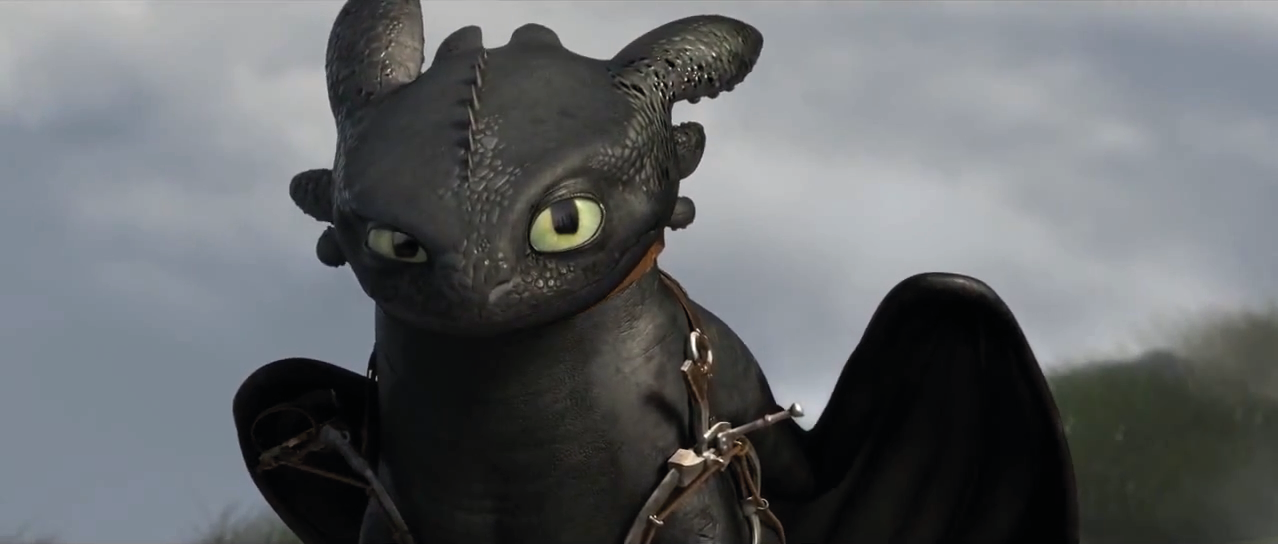
Dragons combine fire, fearlessness and flight: what could be more magical? Ever since I saw How to Train your Dragon, I have been waiting for sequel. How to Train Your Dragon 2 is great sequel! The story twists and turns like Toothless in flight. (Although I am disappointed that one of the films big reveals was added to the trailer, this did not detract greatly from my enjoyment of the film.)

I won't spoil the story at all except to say: this is film about heroism, reconciliation, peace and friendship... really about how anything is possible if you put your mind to it. Of course, it is a fantasy. But it is fantasy with a great heart and lots of fun. The movie will delight you, (if you let it).


The young hero of the story dares to different: Hiccup is not the archetypal viking leader. Much of the narrative tension comes from his 'otherness' and the acceptance or scorn with which others greet this. Hiccup remains content with his own style and feels no need to somehow try to be like his father (who is the archetypal viking leader). But of course, Hiccup admires and loves his father none the less. 

This acceptance of who you are and who others are lies at the centre of solid leadership. Leadership is not about changing who you are: it about bringing out who you are. Developing others is not about changing them but assisting them to bring out themselves. 

Heart and soul: who are you?

_____________

This is the thirty fourth of my new series of blogs about leadership ideas to be found in the movies of our time. You can read here as why I am doing this. Please subscribe to this blog if you want to read more. Thanks. Click the label 'film' to see all the others.
Tomorrow always comes

The Edge of Tomorrow is a sumptuous film. Purists might disagree, but this movie is to Groundhog Day what Zathura was to Jumanji. But please don't let this comparison put you off: the Edge of Tomorrow is a time travelling movie that works (and many don't). It has a strong narrative coherence which keeps you guessing until the end.

Performances by all the actors, major and minor, are well executed which suggests excellent direction, good casting and to tight editing. The special effects are seamless, naturally. The hand held camera style in the battle scenes disorientates and frustrates me: I end up longing for a long shot. For SciFi addicts like me, this is a must see movie!


All leaders are constantly challenged to decide what action will lead to the best possible result. Most leaders do not have the luxury afforded to Tom Cruise or Bill Murray to test out decisions again and again until the right one is found. (Although both films ultimately break the rule. I won't say how Tom's character does it for obvious reasons. But Bill's character, in the end, gives up trying and Zen affords him and us the satisfactory conclusion to Groundhog Day...)

Although: do leaders, in fact, have that luxury? There is a whole array of methods in manufacturing that are known as the 'Design of Experiments' and Genichi Taguchi was one of its well known doyens. The essence is simple: if you want to improve what you do - vary the method systematically, and apply statistics to work out which changes help and which do not.

When was the last time you carried out a controlled experiment at work?

_____________

This is the thirty third of my new series of blogs about leadership ideas to be found in the movies of our time. You can read here as why I am doing this. Please subscribe to this blog if you want to read more. Thanks. Click the label 'film' to see all the others.

Thursday, 12 June 2014

Bromcomromp

So I went to see 22 Jump Street. My experience with big screen American comedy is not brilliant (although small screen American humour I love such as the The Big Bang Theory or Modern Family). But I checked out a review and the film was referred to as a guilty pleasure, so I thought I would give it a whirl. Surprisingly the cinema was full and possibly with more women than men... Bromance buddy movie it maybe but its appeal clearly bridges the gender divide.

And it is funny and well acted. There are some truly laugh out loud moments with some narrative twists that are most enjoyable. It does all go past in a bit of blur but it is a happy and fuzzy blur. And stay to the end, there is a good dollop of self referential humour in the closing credits!


The big leadership message of the film for me was "Don't take yourself too seriously". Pomposity, arrogance, or complete certainty that your way is the only way does not make a good leader. Humour is an essential ingredient in leadership. And if you cannot laugh at yourself or shake off embarrassment, then you have no humour.

And obviously I am not talking about the ability to tell jokes although if you have that timing, it helps. (But take care! Timing for me includes knowing what joke to tell when to whom... and that can go badly wrong!) But the sort of humour I am referring to mainly is the light dance of a well crafted quip that can make other people smile (at least). Can you learn and develop this skill? Yes I think so. But it takes a high degree of self awareness to do so.

How good are you are the well aimed quip?

_____________

This is the thirty second of my new series of blogs about leadership ideas to be found in the movies of our time. You can read here as why I am doing this. Please subscribe to this blog if you want to read more. Thanks. Click the label 'film' to see all the others.

Thursday, 29 May 2014

Sleeping beauty as a lesson in restorative justice

I have written before about Disney's ongoing attempts to create new fairy stories: I am not wild about the idea but (...yes I know despite huge box office takings for Frozen) it can work. I am in two minds about Maleficent. Essentially it a revisionist, radical, feminist re-imagining of Sleeping Beauty where the women come out of the film far better than the men. Which, when you consider the original story, is a reasonable sort of post modern re-balancing. Of course it is a film aimed at 7 - 12 year olds...

Does it work though? The narrative is a bit clunky and some of the special effects are a bit fuzzy (an effect of having a 3D version too?). The acting is pedestrian and Angelina seems to rely upon raising her eyebrows more than she usually does... And I am curious as to why all the accents are either English, Scottish or Irish... (You can see I was distracted). There was not much of a buzz in the cinema either: very little laughing or oohaahhing from the young audience. But probably in the end, worth seeing if you are ten, and half term is getting tedious.


The leadership message? Wings are mighty helpful when is comes to assuming command? But seriously, I would say that the underlying theme is how to deal with regret. In the film we are given two starkly contrasting approaches: fail to deal with it and become ever more bitter. Or allow yourself to recognise what it is doing to you and do something about it. In other words, restore yourself by restoring the person you have harmed.

This is a key feature of restorative justice of course which is as applicable to criminal justice system as it is to the workplace. People do bad things and people make mistakes. A good leader will look for all ways in which balance can be restored. It is not always possible to find them, but it is always possible to look.

When was the last time someone really messed up? How did you respond?

_____________

This is the thirty first of my new series of blogs about leadership ideas to be found in the movies of our time. You can read here as why I am doing this. Please subscribe to this blog if you want to read more. Thanks. Click the label 'film' to see all the others.

Best leadership movies so far

Here is a compilation of some of my film reviews so far: the best movies that contain no 'hide behind the sofa' violence (which was a request of a colleague of mine):

You can always tell you are sitting in a cinema full (mainly) of women: they laugh louder than when more men are present. And so it was with The Other Woman, which my wife & I went to see on Friday night. It is an enjoyable romcomromp with some predictable and some unpredictable comedic moments with all the actors turning in good & funny performances. It is not going to win any cinematic prizes but it is going to give a large number of women and quite a few men (including me) a good few chortles, belly laughs and guffaws: especially when the anti-hero gets his just desserts...

Tracks was one of those delightful films that I stumbled into, almost by accident, having not read any of the reviews or crits beforehand. It is beautifully humble film with no pretensions and quietly tells a moving story of a young woman who decides to trek from Alice Springs to the Indian Ocean with her dog and several camels. The cinematography is understated until near the end when it explodes into a sea of colour. And not much happens in the story but there again, it kind of does...

Locke is one of the best films you are ever likely to see. It is an exquisite and sublime blend of taut editing, compelling direction, hypnotic cinematography, and incandescent acting. The script is bursting with power, emotion and aching understatement. This is a movie that you simply cannot, must not and should not miss...

I do not usually write about DVDs that I have seen but I feel compelled to blog about Hugo, which I watched yesterday afternoon, while doing my ironing. First thing I would say is that I need to watch this again without my shirts in the way. This is beautiful film, with glorious use of colour and framing. It is a marvelous and enchanting story which, like a magical mystery tour, takes you to places you could not imagine. I won't breathe a single word about what happens. This is a film to be seen and be delighted, (especially if you are film hack like me)...

I have woken to the news that Matthew McConaughey & Jared Leto have won the Oscars for Best Actor and Supporting Actor for their parts in the Dallas Buyers Club. I saw this movie a few days ago and privately predicted a win for Mr McConaughey and I am delighted that his colleague has picked up an Oscar too. The central character begins the film as a dishonest, womanising, drug taking, alcohol abusing homophobic cowboy. What makes Mr McConaughey's performance so electrifying is that you are made to love this man with all of his faults and frailities. Equally, Jared Leto is a pitch perfect blend of strength, weakness, despair, humour, vulnerability and defiance in the face of raging HIV...

I was half expecting Jeremy Kyle to feature in August: Osage County as this is a family that collect more secrets than most and express their feelings in somewhat dramatic ways. I am aware that this film has attracted some criticism for being just too darn contrived to win a set of Oscars. For me that is churlish and possibly misogynist: there are performances here by the main characters that rivet you to your cinema seat. This is a powerful movie of an extraordinary play, which will leave you spinning and catching up on the breaths you forgot to take during the film...

Wadjda is quite honestly one of the most amazing films I have ever seen.It is the first ever feature film, directed by a woman, to be made in Saudi Arabia. Yes, you read that correctly. The film tells the simple story of young girl who falls in love with a bicycle and enters a school competition to win the money needed to buy it. But that is where the simplicity ends...

Reviews of The Secret Life of Walter Mitty have been mixed. As it happens, I think it is one Ben Stiller's finest movies (he directed it too). As it is (loosely) based on the Thurber short story, it is fair to say that the narrative is pretty uncomplicated. Although the film contains some troubling contradictions (would a highly skilled skateboarder become a negative images manager?), it ends up delivering a thumping good message interspersed with comedic magic (the helicopter pilot) and some quiet moments of Zen (the leopard and the football game)...

And, each link has a take on the leadership theme within each movie.

Wednesday, 14 May 2014

Bass notes

Some films metaphorically trip along with a light descant rhapsody while others have a much deeper, lower and sombre range. Blue Ruin is one such movie: you know almost from the start, this is not going to end well. In fact not many good things happen in the movie at all. But this is a finely acted and directed movie with all the taught tension of a car suspension spring.

This is a film where the almost invisible past crowds in on the present, compelling people (one in particular) to follow through on a devastating plan. It portrays the chaos of violence and the desolate sadness of revenge with shuddering conviction. This is not a date night movie but it is one that you should see.


The main character is depicted as a complete 'loner' but nevertheless he knows who his friends are. Without them, his mission will fail. Leadership, especially senior leadership, is a lonely position. You may feel surrounded with people who have designs on your role, and you may be right.

But the best leaders will always know on whom they can count and on whom they would depend at their peril. Being able to distinguish one from the other is key skill for leaders.

How do you know whom you can trust?

_____________

This is the thirtieth of my new series of blogs about leadership ideas to be found in the movies of our time. You can read here as why I am doing this. Please subscribe to this blog if you want to read more. Thanks. Click the label 'film' to see all the others.

Monday, 12 May 2014

Neighbourhood Watch

I am probably not in the demographic that Bad Neighbours (or Neighbors as it is called in the US) is aimed at, but this really is a lazy film. It felt like a rehash of Animal House, all the American Pie films & The Graduate. While the audience of teenagers and 20 somethings laughed around me, they were not guffawing. Too many of the jokes had already been trailed, some went on too long and some were just so contrived that I was left fearing for American comedy's sense of irony.

No doubt it will take many millions of pounds and dollars in its opening weekends, but it will not be bought as a treasured DVD, I predict. There was humour to be had but not exploited in the scenario on which the film is based. Not a very subtle film, devoid of pathos & replete with stereotypes.


The leadership theme within this movie is not easy to spot. But it is there. The fulcrum moment of this film is when a promise is broken. Whilst excuses can always be found by the promiser as to why a promise is broken, the promisee (as it were) will always be less understanding. This is why leaders who make promises in haste will probably come to repent at a more leisurely pace.

My first consultancy job was working for a firm called MRA International under the leadership of Mike Robson. I always admired the simple values statements that he had developed when setting up the company. One statement was simply: Do as you say you are going to do.

It is a maxim I try very hard to stick too.

_____________

This is the twenty ninth of my new series of blogs about leadership ideas to be found in the movies of our time. You can read here as why I am doing this. Please subscribe to this blog if you want to read more. Thanks. Click the label 'film' to see all the others.

Sunday, 4 May 2014

When just leadership is present

You can always tell you are sitting in a cinema full (mainly) of women: they laugh louder than when more men are present. And so it was with The Other Woman, which my wife & I went to see on Friday night. It is an enjoyable romcomromp with some predictable and some unpredictable comedic moments with all the actors turning in good & funny performances. It is not going to win any cinematic prizes but it is going to give a large number of women and quite a few men (including me) a good few chortles, belly laughs and guffaws: especially when the anti-hero gets his just desserts.

It is well directed & edited: the film slides seamlessly from one scene/set to another (including a house by the sea that my wife and I fell in love with). The story just about hangs together if you ignore the fact that the emotional reactions to the various scenarios are sublimely inappropriate & unlikely. But don't let that put you off: it's a comedy, it's a fantasy and it's good fun!


This is a film about teamwork: about three women turning their differences and conflicting interests into a purposeful and efficiently executed plan. There is even a sort of Gantt chart thrown in for good measure to indicate how each of the women are scheduled to take action. They respect and agree how to deploy each other's skills & talents in pursuit of clear and agreed aim.

And there is no leader since they are all acting in the role of leader: the leadership comes from their shared goal. Sometimes a leader needs to know when not to be a leader and just share in the joint project.

When did you last give up being a leader?

_____________

This is the twenty eighth of my new series of blogs about leadership ideas to be found in the movies of our time. You can read here as why I am doing this. Please subscribe to this blog if you want to read more. Thanks. Click the label 'film' to see all the others.

Monday, 28 April 2014

Camel lady

Tracks was one of those delightful films that I stumbled into, almost by accident, having not read any of the reviews or crits beforehand. It is beautifully humble film with no pretensions and quietly tells a moving story of a young woman who decides to trek from Alice Springs to the Indian Ocean with her dog and several camels. The cinematography is understated until near the end when it explodes into a sea of colour. And not much happens in the story but there again, it kind of does.

We are led to the view that this journey could be about the woman in question wanting to walk out her demons, having decided that only the kind of 'aloneness' you can get in huge desert will help her to do this. There are other characters who flit in and out of her journey, mostly to her annoyance (but not ours). It is a wide and wise film with a big sky and a big belief that we all have a journey like this inside us.


The main character has a very treasured compass. Without her compass, she would get quickly lost in a sea of sand and scrub. But that isn't the main reason why she values the compass so highly: we learn why during the film. The compass has a worth that extends well beyond its utility.

Sometimes leaders can be very functional and only rate objects, (or work methods, organisational structures etc) for their contributions to productivity & performance. However wise leaders recognise that the value of these artifacts & features of the organisation may well include high emotional value and only makes changes with great circumspection.

What are the totemic features of your organisation that you only change with great care?

_____________

This is the twenty seventh of my new series of blogs about leadership ideas to be found in the movies of our time. You can read here as why I am doing this. Please subscribe to this blog if you want to read more. Thanks. Click the label 'film' to see all the others.

Saturday, 26 April 2014

Transcendence, transference, trans...something

I went to see Transcendence really hoping all the critics were wrong. I was thinking often people just don't get scifi, or they went expecting mega special effects and didn't get them or whatever... But I have to say were it not for Mr Depp on the cast, it would have sunk without trace by now. I felt like I was watching a Dad's race at a primary school: lots of urgent flailing of legs & arms to get to the finish line but eventually falling into a lumpy heap.

The film tries desperately to knit together nanotechnology, spirituality, psychology, biochemistry and artifical intelligence (yeah, all that) into something that ends up being cross between a reworking of the myth of Icarus, the Six Million Dollar Man and Cold Mountain. So I thought, who was the writer? It turns out to be one Jack Paglen whose credits include a forthcoming remake of Battlestar Gallactica. Say no more. Watch this film only if you drool over Mr Depp (and plenty do).


One of the core themes to the movie might be summed up in the words: just because you can does not mean that you should. At one point in the film, it is proposed that the difference between self aware AI and plain ordinary very clever AI is knowing the difference between right and wrong (as if ethics is ever binary). And then the film goes on to show how even self aware AI doesn't know the difference between right and wrong. It is all very confusing, rather than been consciously ironic - or perhaps it was! (Certainly, there is a moment where one of the main characters is booked secretly into a hotel room in name of Turing: even though I was sitting in MK, which includes Bletchley, no one else seemed to laugh...)

But to get back to the leadership point: the film is about the wise (and unwise) use of technology. I would contend that the mark of a fine leader is one who is able to distinguish what can be done from what should be done. In other words ethics is core to good leadership.

As a leader, what was your last ethical decision?

_____________

This is the twenty sixth of my new series of blogs about leadership ideas to be found in the movies of our time. You can read here as why I am doing this. Please subscribe to this blog if you want to read more. Thanks. Click the label 'film' to see all the others.

Friday, 25 April 2014

The 'Truncheon of Doom' & what price justice?

You may well have heard of the 'Barnet Graph of Doom'


This basically shows that Barnet council is going to run out of money at round about the end of this decade when sources of income dry up (DCLG goes into deep hibernation) and demand for social care & children's services just keep rising.

Birmingham not to be outdone has created the 'Jaws of Doom'


I believe there is also a 'Scissors of Doom' graph which seeks to predict when the NHS will run out of money / healthcare consumes all of public spending / Government introduces the Logan's Run option to reduce demand (I jest of course...) I cannot find it on the net: perhaps it is censored as being even scarier than senior politicians in swimming trunks...

But this got me wondering: do we have (or need) a 'Truncheon of Doom': a graph which shows when predicted resources available for the police & criminal justice services are exceeded by demand for said services? Could such a graph be constructed? How elastic is demand for policing? Or will money always be found for sufficient courts and prisons to lock people up and deliver justice?

Evidence based practice has now migrated across from healthcare into the probation and police services (although there is still a long way to go), a trend I was predicting back at the turn of the century. In a similar way, do we now need more Criminal Justice Economics (like Health Economics)? 

The University of York seems to be ploughing quite a lonely furrow. But is there could be much more... do we need more academic research to look at costs and benefits of various approaches to policing, probation and other parts of the CJS? When does the 'Truncheon of Doom' close in?

But let me make a further link (and I am just exploring this really, prompted by part of Peter Neyroud's input last night)...

Retributional Justice is about right & wrong, about punishment, guilt and fair process. In many ways the victim is as much a subject of the justice process as the offender. The benefits to the victim are not weighed against the cost of the judicial intervention. Thank Heavens, I here you say, justice should have no price because it has intrinsic and supreme value... Do you believe that?

Whereas, on the other hand, one model of Restorative Justice sees crime as a harm to be healed, and therefore the process of justice becomes the method by which that healing occurs. And so if that healing can occur without due (and hugely costly) legal process but instead with some other intervention / RJ based desistance method perhaps: then is that a better outcome for the individuals involved and indeed for society at large? (Because it could be far more cost effective...)

As I say, I don't know. I want to think about this some more. But what do you think?