Sicario paints a picture of Juarez in Mexico that reminded me of the hell depicted in Dusk Till Dawn. This is a deeply depressing and bleak film which purports to show a world in which the police have lost control and the drug cartels are in charge. In a word: chilling (to your core).
This is an uncompromising film that suggests the only way to tackle the brutal crime regimes depicted in the movie is to deploy 'righteous' brutality against them. The 'good guys' just kill a few less people in slightly less horrific ways. There are images in this film that will stay with you for a long time: do not see it if this concerns you. But do see it if you want to see a tight and crisply acted, well edited and filmed movie. A raw and uncompromising film.
This film poses that timeless moral question: do the ends justify the means. Of course, there are no simple or glib answers. This film should make most people feel very uncomfortable when they observe the ethical compromises being made in pursuit of a more (??) just result.
As this series of blogs has raised on more than one occasion: leadership is all about making (often difficult) ethical choices. And having made them, being prepared to stand by those choices. For example if a large business is hacked (yielding many lost personal details of customers) but then it emerges that a previous decision was made not to invest in better security for just commercial reasons... what then? All leaders need to be aware of the ethical dimensions of each and every decision they make.
What were the ethics in your last decision?
_____________________
This is Blog 120 in my 2014/2015 series of blogs about leadership ideas to be found in the movies of our time. You can read here as why I began doing this (with an update at the end of 2014). Please subscribe to this blog if you want to read more. Thanks. Click the label 'film' to see all the others.
Monday, 26 October 2015
What is a vote?
Frankly I am astounded it has taken a 100 years to make Suffragette. This is but one story of the movement that campaigned for decades to win women the same rights to vote as men. There must be many more stories to tell. Perhaps there will be Suffragette 2!
Unsurprisingly, the film is not without its critics and many people, I expect, will have been looking to find fault with it, given its subject matter. But, in my view, the narrative holds together well and whilst the acting is not Oscar winning it is fine acting. The film comes close to being a documentary at times which makes it all the more powerful, emotional and uplifting. This is a film to be seen.
It is often not remembered, how long some campaigns take to achieve their ambitions. The Suffragette movement was one, another was the campaign to outlaw the slave trade which took more than 20 years. In these and many other cases, their leaders and activists knew they were right: they simply had to carry on.
Good leaders don't give up when they are sure their position is the correct one, no matter what the opposition. Strategy might develop and tactics might have to change: but the goal remains the same. Leaders will flex methods but do not compromise on what they know to be right.
What do you know to be right?
_____________________
This is Blog 119 in my 2014/2015 series of blogs about leadership ideas to be found in the movies of our time. You can read here as why I began doing this (with an update at the end of 2014). Please subscribe to this blog if you want to read more. Thanks. Click the label 'film' to see all the others.
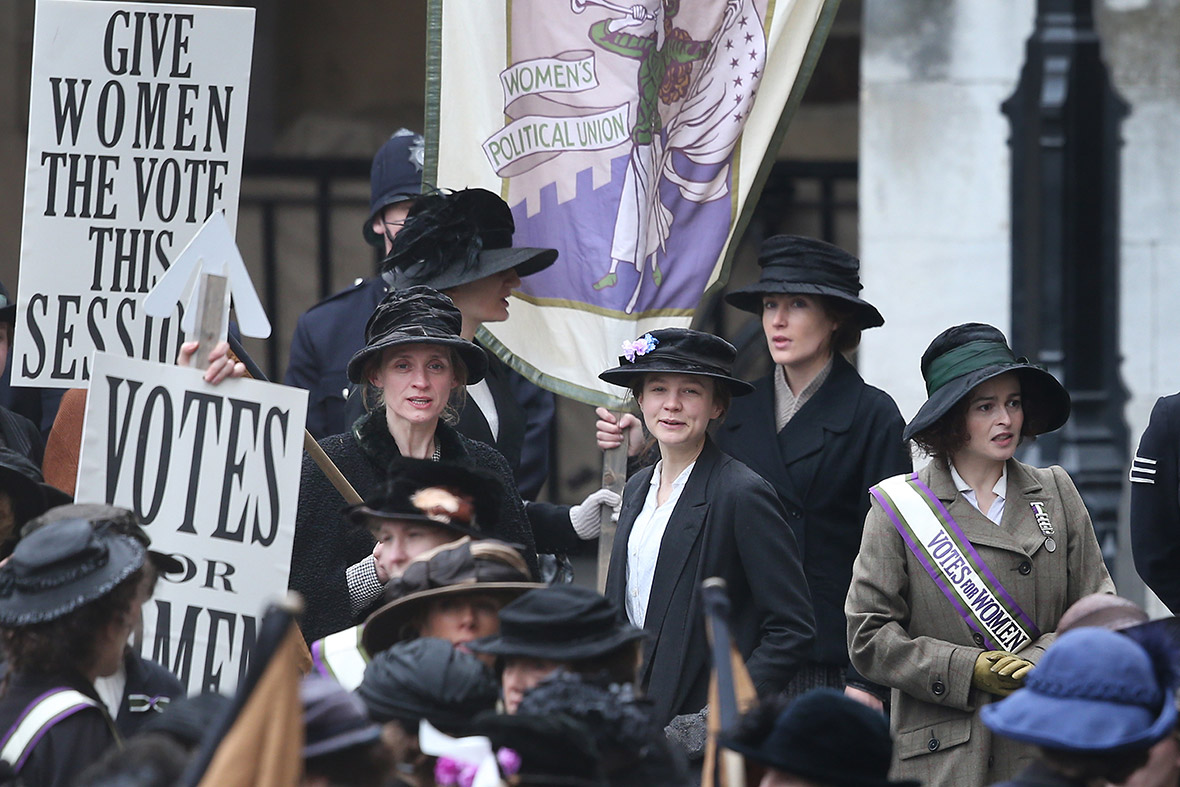
Unsurprisingly, the film is not without its critics and many people, I expect, will have been looking to find fault with it, given its subject matter. But, in my view, the narrative holds together well and whilst the acting is not Oscar winning it is fine acting. The film comes close to being a documentary at times which makes it all the more powerful, emotional and uplifting. This is a film to be seen.
It is often not remembered, how long some campaigns take to achieve their ambitions. The Suffragette movement was one, another was the campaign to outlaw the slave trade which took more than 20 years. In these and many other cases, their leaders and activists knew they were right: they simply had to carry on.
Good leaders don't give up when they are sure their position is the correct one, no matter what the opposition. Strategy might develop and tactics might have to change: but the goal remains the same. Leaders will flex methods but do not compromise on what they know to be right.
What do you know to be right?
_____________________
This is Blog 119 in my 2014/2015 series of blogs about leadership ideas to be found in the movies of our time. You can read here as why I began doing this (with an update at the end of 2014). Please subscribe to this blog if you want to read more. Thanks. Click the label 'film' to see all the others.
Stranger on the shore
The Intern is a delightful intergenerational film that, whilst not looking for side splitting guffaws, will quietly make you smile and chuckle. This is a uplifting film that will appeal to a demographic that values ageing, tenderness and the application of wisdom.
This is film embedded with the hope that there is always something to learn, it is always possible to make amends to move on and it is always possible find love, even when that seems unlikely. De Niro, Hathaway & Russo give this film a warm vibrating timbre.
In most organisations, the barriers between people learning from each other are legion. These barriers can include status, gender, age, experience and so on... Often people not so much refuse to learn from others but simply do not conceive of the possibility that they might.
The job of a good leader is to break down such barriers and enable, persuade, nudge and maybe even cajole people to search out colleagues to learn from. As humans, we are learning all the time: why don't organisations harness this knowledge as much as they can? Good leaders make that happen.
How have you helped people learn from each other?
_____________________
This is Blog 118 in my 2014/2015 series of blogs about leadership ideas to be found in the movies of our time. You can read here as why I began doing this (with an update at the end of 2014). Please subscribe to this blog if you want to read more. Thanks. Click the label 'film' to see all the others.
Thursday, 22 October 2015
No Hal
The Martian is a triumphant film: pure Sci-fi story about an astronaut surviving against the odds on a hostile planet. There's no artificial intelligence involved: no Hal present to slowly and inexorably undermine the central character's mental health.
The editing and direction are seamless - and the acting about as convincing as it could be. You will believe you are watching a film made on the red planet. This is a hopeful and optimistic movie - one to definitely see.
This is a film about resilience and creativity. Mars is the classic burning platform which drives the marooned astronaut to higher and higher levels of risk and innovation. There is nowhere else to go.
Should every business or organisation spend some time on Mars, metaphorically? How can leaders create this compelling urgency to shed all past attachments to practice and think afresh about just how to deliver superlative and competitive services? This will hinge on whether people will really believe the leader's request to innovate because there is no alternative...
Can you command that level of trust?
This is Blog 117 in my 2014/2015 series of blogs about leadership ideas to be found in the movies of our time. You can read here as why I began doing this (with an update at the end of 2014). Please subscribe to this blog if you want to read more. Thanks. Click the label 'film' to see all the others.
Tuesday, 6 October 2015
The Scottish Film
Shakespeare purists will probably raise an eyebrow or two at Macbeth, as the script is closely based upon but not completely faithful to the original play. But wow...!!! This film is as brutally beautiful as a film could be. This is a harsh depiction of life in early Scotland which will make you shiver with the cold and the damp on screen... and the unforgiving, horrific 'justice' meted out to its warriors, citizens and court will chill you. You wonder how anyone survived such a world.
The acting is stupendous: raw, subtle, powerful and compelling. Macbeth's descent into madness and witchery is complete whilst Lady Macbeth is painted much more sympathetically than in other productions I have seen. There are no soft edges in this film: even Macduff seems to be made from angled welded steel. This is a must see film!
Much has and will be written about the leadership lessons in Macbeth (just google it!). But I will take a different angle: much leadership is involved in daring to offer another interpretation of a well worn path. You can imagine the writers and directors meeting and saying "I know, let's do another film of Macbeth!" But true leadership is to be found in making this challenge and then following it through to completion.
Leaders in business and the arts are to found amongst those who take an old idea and re-imagine it in a way that is fresh, contemporary and persuasive (as this film has done). All this involves the courage of Macbeth, the tenacity of Macduff, the goodwill of Duncan, the strategy of Lady Macbeth and the nobility of Banquo. (I could go on...)
What is the next old idea to be refreshed?
_____________________
This is Blog 116 in my 2014/2015 series of blogs about leadership ideas to be found in the movies of our time. You can read here as why I began doing this (with an update at the end of 2014). Please subscribe to this blog if you want to read more. Thanks. Click the label 'film' to see all the others.
To bill or not to bill
Bill is an enjoyable romp through one version of how William Shakespeare came to write plays. I am not sure how accurate this version is, but it is quite funny and occasionally laugh out loud funny. This is a low budget jump across from the Horrible Histories TV series, indeed so low budget that quite a few actors play multiple parts (which adds to the humour...)
Is this film made for children? Well yes.. and no: it is probably pitched squarely at the family market with plenty of subtle wit to keep the parents amused as well. It is not a great film and certainly does not have a script to match anything that the Bard wrote, but on a rainy Sunday afternoon, you won't be disappointed.
The leadership theme for me from this film was about finding your talents. Sometimes, we get stuck doing one thing (lute playing in this narrative) but really our calling is elsewhere (being a playwright). The mark of a good leader is not only one who recognises her/his own talents (and exploits them) but one who is also great in spotting (and nurturing) talents in others.
Spotting talents in others means going beyond what is on obvious display and looking for the clues behind the presentation. It also means asking good questions, listening and creating opportunities in which people might discover their talents, ones they may not have known they had.
How good a talent spotter are you?
_____________________
This is Blog 115 in my 2014/2015 series of blogs about leadership ideas to be found in the movies of our time. You can read here as why I began doing this (with an update at the end of 2014). Please subscribe to this blog if you want to read more. Thanks. Click the label 'film' to see all the others.

Is this film made for children? Well yes.. and no: it is probably pitched squarely at the family market with plenty of subtle wit to keep the parents amused as well. It is not a great film and certainly does not have a script to match anything that the Bard wrote, but on a rainy Sunday afternoon, you won't be disappointed.
The leadership theme for me from this film was about finding your talents. Sometimes, we get stuck doing one thing (lute playing in this narrative) but really our calling is elsewhere (being a playwright). The mark of a good leader is not only one who recognises her/his own talents (and exploits them) but one who is also great in spotting (and nurturing) talents in others.
Spotting talents in others means going beyond what is on obvious display and looking for the clues behind the presentation. It also means asking good questions, listening and creating opportunities in which people might discover their talents, ones they may not have known they had.
How good a talent spotter are you?
_____________________
This is Blog 115 in my 2014/2015 series of blogs about leadership ideas to be found in the movies of our time. You can read here as why I began doing this (with an update at the end of 2014). Please subscribe to this blog if you want to read more. Thanks. Click the label 'film' to see all the others.

Not so hot
I really wanted to like Maze Runner: The Scorch Trials as I felt a little guilty after being not especially enamoured with the first film (see my write up here) due to seeing it in a Serbian cinema with subtitles, while the audience talked all the way through it... Perhaps the sequel would be better...? Sadly, it isn't.
The film comprises of a tedious set of scenes of people running all over the place, sometimes across post apocalyptic deserts or through cavernous industrial buildings. Yawn. Why don't they just leave off the film making and make a computer game instead, to which the narrative is much more suited. Sadly these are forgettable characters in a forgettable plot. I will not be bothering with the third one.
The job of a leader is to lead which often (though not exclusively) means being out in front, setting the pace. Sometimes leaders set too fast a pace and end up some distance away from those they are seeking to lead. The bigger the gap, the less the leadership in my view.
The art of good leadership is keeping the gap within reach and where necessary increasing the acceleration, but not by too much. Leaders can and should be pacesetters but they are not in a race. Pacesetters draw people on to greater performance but they are not competing.
How is your pacesetting?
_____________________
This is Blog 114 in my 2014/2015 series of blogs about leadership ideas to be found in the movies of our time. You can read here as why I began doing this (with an update at the end of 2014). Please subscribe to this blog if you want to read more. Thanks. Click the label 'film' to see all the others.
Tuesday, 22 September 2015
A walk on the gentle side
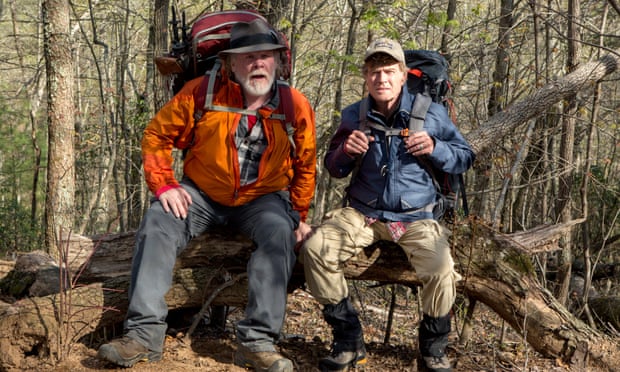
A Walk in the Woods is a film that will amuse, delight & charm you... but it won't stretch you. This is more of an amble than a hike. Robert Redford twinkles (a little) but is out acted by Nick Nolte who lurches across the screen as his crabby counterfoil.
The glowing twinkles come from Mary Steenburgen who lights up a section of the film. Emma Thompson reprises her patient long suffering wife from Love Actually. It is a Sunday afternoon movie but with some glorious shots of US landscapes.
Some of the narrative edge comes from trying to predict when (or if) they will abandon to 2000+ mile Appalachian trail. At what point will they conclude they have "done it"?
Like leadership, knowing when to quit and when to persist is a critical skill, and one that is closely observed by those working with the leader. Can this timing be learnt? I think it can: through careful analysis of achievements against plans, listening to your own intuitions & emotions and watching the reactions of others.
When did you last quit? Why?
This is Blog 113 in my 2014/2015 series of blogs about leadership ideas to be found in the movies of our time. You can read here as why I began doing this (with an update at the end of 2014). Please subscribe to this blog if you want to read more. Thanks. Click the label 'film' to see all the others.
Thursday, 17 September 2015
To die will be an awfully big adventure
Me, Earl & the Dying Girl is a quirky movie that will have a special delight for all movie buffs as it centres on the hero of the story making a film for a young cancer sufferer. High school student Greg makes parodies of films with his 'co-worker' (not friend) Earl. I am envious of Greg & Earl: if I were a student again, would probably be making movies like them.
There are so many 'teen on a journey to discovery' movies about these days and it would be easy to dismiss this as yet another one. What marks this one out is the way the narrative plays with the audience and takes a jagged line towards its poignant and uplifting conclusion. And the acting is about as naturalistic as you can get. This is a movie to see.
Whilst at university, I once spent several lunchtimes arguing with a couple of cybernetics students about whether there would ever be artificial intelligence that was superior to humans. I think I won the debate by stating that our mortality will always give us the edge. (Perhaps one of them then went off to write the Terminator series of films... or was it the Matrix?!)
This film is about what happens to your thoughts when you are faced with your own death or indeed the death of someone that you get to know very well. Interesting questions get asked and answered. One of the critical features of leadership is having the capacity to talk about mortality as part of the life of an organisation. Leaders know that sometimes organisations can die. And the threat of this can engineer the kinds of ingenuity and creativity that a company needs to survive in a competitive market place. The leadership judgement comes in how far you push this: go too far and people will fearfully & hopelessly give up. Get it right and people will be inspired to find clever ways to improve.
How far do you push it?
_____________________
This is Blog 112 in my 2014/2015 series of blogs about leadership ideas to be found in the movies of our time. You can read here as why I began doing this (with an update at the end of 2014). Please subscribe to this blog if you want to read more. Thanks. Click the label 'film' to see all the others.
Tuesday, 8 September 2015
Solid cardboard!
I have been eagerly anticipating Paper Towns ever since I heard news of its production, (having read the book last summer). Indeed, I even paid to go and see it as I was nowhere near a Cineworld cinema showing it at the time! I was not disappointed: this film is has stayed true to the book and evokes a rite of passage urgency rarely seen. Acting is top notch and in general the whole film is just good fun.
But as with all good movies, there are deeper and more reflective themes too. Having been a teenager once (♬ a long, long time ago, I can still remember... ♬) I can recall some of those questions, feelings and thoughts. I can remember feeling as if I was leaning at 45° over cliff just waiting to launch myself on the adult world. This film will remind you of what that is/was like. Go see it!
I think the leadership theme from this movie for me is that it is OK to go away... (and maybe even do it in a mysterious and dramatic way too!). Sometimes leaders think that they have to be there all the time, practising their leadership, being on show, being present...
But that doesn't always have to be the case. It is important for leaders to take time out, sometimes a lot of time out to recharge batteries, think about strategy, direction and indeed, leadership itself. And guess what, by being absent, leaders create the space for others to emerge as leaders. So when (or even if) the leader returns, she/he returns to a context in which there is more leadership (see the previous post).
When are you going away next?
_____________________
This is the Blog 111 in my 2014/2015 series of blogs about leadership ideas to be found in the movies of our time. You can read here as why I began doing this (with an update at the end of 2014). Please subscribe to this blog if you want to read more. Thanks. Click the label 'film' to see all the others.
Monday, 7 September 2015
Back of the class
I wanted to enjoy Bad Education as I liked the concept, hailing as it does from a long tradition of school class based (in both senses) comedy, beginning (for me) with Please Sir. But it just wasn't that funny. True, there are a few laugh out loud moments but these are far and few between (and mostly appeared in the trailer). The film starts with some awkward homage to ET that is not so much offensive and ridiculously over contrived...
Moreover, the depiction of Cornish people is not much short of racism. Maybe I am in the wrong demographic to truly appreciate this film, but I did not hear much laughter from the those who might be, sitting near me in the cinema. Puerile comedy can be funny, but this is not a great example of it.
Is Jack Whitehall the leader? Or do other members of his class occupy that role? Does there always have to be just the one leader? Or can leadership be distributed amongst several people, with individuals taking leadership in different areas?
What role does a leader have in ensuring that leadership is distributed? I think one of the key elements of a effective leader is not holding on to all the leadership but being prepared to coach others / allow others / seek others to share the leadership.
How good are you at sharing?
_____________________
This is the Blog 110 in my 2014/2015 series of blogs about leadership ideas to be found in the movies of our time. You can read here as why I began doing this (with an update at the end of 2014). Please subscribe to this blog if you want to read more. Thanks. Click the label 'film' to see all the others.
Tuesday, 11 August 2015
Luke warm pursuit
Hot Pursuit never really got going for me, despite all the wise cracking, car chasing, gun toting cops that riffled across the screen. The story felt tired, like a curious mash up of Witness, Miss Congeniality, Thelma & Louise and Blow. It was also just too preposterous (and featuring some rather tedious stereotyping) to be in any way convincing...
Again, this is another example of where the trailer editor ought to get an award for business development rather than the director of the whole movie. Reese Witherspoon is so much better than this: how could she make this after (for example) Wild or Legally Blond? Disappointing, I am afraid.
Part of the comedic narrative rests on the reputation earned by Reese Witherspoon's character due to a miscommunication in a time previous. It highlights that no matter how good a leader you might be, any leader can be subject to a happen chance event that can change a reputation overnight.
As leaders know, reputation is often hard earned but can be so easily lost. The question is: what can a leader do not only to build & maintain a solid reputation but also ensure that reputation is robust, able to withstand a glitch of a moment? And those moments may not always be avoidable despite earnest actions always to be consistent with one's reputation.
What are you doing to ensure your reputation is robust & resilient?
______________________
This is the Blog 109 in my 2014/2015 series of blogs about leadership ideas to be found in the movies of our time. You can read here as why I began doing this (with an update at the end of 2014). Please subscribe to this blog if you want to read more. Thanks. Click the label 'film' to see all the others.
Again, this is another example of where the trailer editor ought to get an award for business development rather than the director of the whole movie. Reese Witherspoon is so much better than this: how could she make this after (for example) Wild or Legally Blond? Disappointing, I am afraid.
Part of the comedic narrative rests on the reputation earned by Reese Witherspoon's character due to a miscommunication in a time previous. It highlights that no matter how good a leader you might be, any leader can be subject to a happen chance event that can change a reputation overnight.
As leaders know, reputation is often hard earned but can be so easily lost. The question is: what can a leader do not only to build & maintain a solid reputation but also ensure that reputation is robust, able to withstand a glitch of a moment? And those moments may not always be avoidable despite earnest actions always to be consistent with one's reputation.
What are you doing to ensure your reputation is robust & resilient?
______________________
This is the Blog 109 in my 2014/2015 series of blogs about leadership ideas to be found in the movies of our time. You can read here as why I began doing this (with an update at the end of 2014). Please subscribe to this blog if you want to read more. Thanks. Click the label 'film' to see all the others.
Friday, 31 July 2015
No intermission
Mission Impossible - Rogue Nation is a deliciously ludicrous (in the true sense of the word), action packed, edge of your seat and beautiful film to watch: I enjoyed it immensely. The baddies are only so menacing, the gunfights devoid of all blood and the sexual chemistry is at a level that even Disney would approve. Which all means that a) it's a 12A and b) you can just delight in the twists of the narrative and glory at the stunts.
I remember MI on TV when I was growing up and the theme tune still sends a shiver of excitement down my spine. These big screen versions are fast becoming one of my favourite film genres, probably second only to Bond (although watch out 007...) I look forward to MI... six (now there's a storyline...)
There is a moment in the film when Ethan is invited to walk away, forget what he does and start a new life. I will leave you to guess what he chooses... But at sometime all leaders face this dilemma.
There will be moments for every leader when she or he just thinks something like 'ah, what the heck, I just want to grow tomatoes'. Being a leader can be a gruelling, lonely and un-thanked role and the lure of just opting out can be overwhelming. There are times to go and times to stay, of course.
How will you know when it is right time to go?
______________________
This is the Blog 108 in my 2014/2015 series of blogs about leadership ideas to be found in the movies of our time. You can read here as why I began doing this (with an update at the end of 2014). Please subscribe to this blog if you want to read more. Thanks. Click the label 'film' to see all the others.
I remember MI on TV when I was growing up and the theme tune still sends a shiver of excitement down my spine. These big screen versions are fast becoming one of my favourite film genres, probably second only to Bond (although watch out 007...) I look forward to MI... six (now there's a storyline...)
There is a moment in the film when Ethan is invited to walk away, forget what he does and start a new life. I will leave you to guess what he chooses... But at sometime all leaders face this dilemma.
There will be moments for every leader when she or he just thinks something like 'ah, what the heck, I just want to grow tomatoes'. Being a leader can be a gruelling, lonely and un-thanked role and the lure of just opting out can be overwhelming. There are times to go and times to stay, of course.
How will you know when it is right time to go?
______________________
This is the Blog 108 in my 2014/2015 series of blogs about leadership ideas to be found in the movies of our time. You can read here as why I began doing this (with an update at the end of 2014). Please subscribe to this blog if you want to read more. Thanks. Click the label 'film' to see all the others.
Thursday, 30 July 2015
Up side down and round about
Inside Out didn't really grab me although I know it has wowed others. And trust me: I love Pixar movies... but this one kind of lost me. I have been struggling to understand why. Partly, I felt duped by the trailer such that the inner dialogue between mother, father and daughter only happened once in the movie but figures large in the trailer.
Partly, it was the whole candy cane landscape of the girl's mind that became increasingly convoluted as the narrative also disappeared up its own cortex. The story is not that complex and it has a strong and important theme about the value of all emotions (not just just the joyful ones). But what lost me was a fair degree of sub text sexism that they just didn't have to use... Frustrating, because I really wanted to like it. Maybe this movie has really been made for children, although I didn't hear much laughing and giggling from the young audience that surrounded me...
Emotional intelligence (or quotient) is what good managers are meant to have: an ability to understand their own emotions, appreciate the emotions of others and exercise leadership that is mindful of the impact of emotions on day to day (business) life. As with most leadership theories, EQ has its adherents and detractors.
For me one of the key questions is whether a leader who doesn't have very much emotional intelligence can develop it to a level where it becomes helpful to them and those that they lead. The answer appears to be a cautious yes, but only under certain conditions.
How are you developing your EQ?
______________________
This is the Blog 107 in my 2014/2015 series of blogs about leadership ideas to be found in the movies of our time. You can read here as why I began doing this (with an update at the end of 2014). Please subscribe to this blog if you want to read more. Thanks. Click the label 'film' to see all the others.
Friday, 24 July 2015
Self absorbed
Self/Less struggles with a clunky narrative that only just about manages to hang together: I could almost hear the screenwriter scrabbling through papers to check constantly on narrative integrity. Time travel films do this. So do body swapping story lines. The acting is a bit of stretch too, even dare I say, I think Mr Kingsley slightly hams it up (deliberately?)
Maddie is the most convincing and her screen daughter the most delightful. And yet again, another US film makes the baddie an Englishman: this is a cliché now and for which I probably blame Alan Rickman (!) This is a Sunday afternoon film if you are bored and in need of a quick scifi fix...
This is a very ethical film in that ethics are a critical part of the story: you will only come to understand fully what the title means at the end of the movie. Every day, usually without knowing it, we make dozens of ethical decisions. They may not feel like it, but the impact of what we do, say, buy, not buy, tweet, not tweet etc all have ethical echoes.
The ethics of leadership cannot be underestimated. In my view, it is the responsibility of all leaders to never let a day go by without reflecting on that day's ethical sub text. This means having a vocabulary & framework against which to examine a day's proceedings.
What is your ethical framework?
______________________
This is the Blog 106 in my 2014/2015 series of blogs about leadership ideas to be found in the movies of our time. You can read here as why I began doing this (with an update at the end of 2014). Please subscribe to this blog if you want to read more. Thanks. Click the label 'film' to see all the others.
Tuesday, 21 July 2015
Comically self aware
Antman does not take itself very seriously and there are layers of cinematic self awareness rarely seen in any movie let alone a super hero comic book one. The lead character almost looks into the camera lens and smiles. Which only makes the film even more endearing and fun.
My only criticism is that the ants looked a bit plastic and I would have thought that CGI could have done a better job of them but perhaps they ran out of budget. But overall this is a subtle (yes truly!), funny and gripping film that I heartily recommend (if you like this genre). And the sequel is coming (again, make sure you stay to the end of the credits...)
A common theme of the superhero genre is the little guy (almost always 'guys', it must be said) who is thrust into a situation where their 'inner hero' is forced to emerge. Suddenly they find they can fight like Bruce Lee, have the courage of Sitting Bull and the charismatic allure of George Clooney... And of course, we can all believe (especially if we are 10 years old) that anyone of us is like that. I well remember running around the playground with my gaberdine macintosh buttoned up around my neck like a cape...
But there is an old adage from the One Minute Manager series of books: if you want people to be responsible, give them responsibility. Likewise, if you want people to show leadership, find ways in which they discover their own leadership.
As a leader, how good are you at creating the situations in which others discover their own leadership?
______________________
This is the Blog 105 in my 2014/2015 series of blogs about leadership ideas to be found in the movies of our time. You can read here as why I began doing this (with an update at the end of 2014). Please subscribe to this blog if you want to read more. Thanks. Click the label 'film' to see all the others.
Friday, 17 July 2015
Good vibrations
Love and Mercy surprised me: I was expecting a standard biopic. Instead I was entranced by a compelling, fascinating and inspiring film that is as subtle and layered as the best Beach Boys' tracks. And just like some of their tracks the chord changes are sometimes hard to follow and sometimes seem out of place... but they are not: this film presents integrated insights into music, power, fame, families and love.
Tripping between the 60s and 80s, this film endeavours to explain the history of Brian Wilson's genius. It raises deep questions about the nature of mental health, creativity and friendship. The acting is seamless and the cinematography is stunning, using colour in some magical ways. This is a film to see - right up to the last credit. Wow!!
Some of the best bits of Beach Boys music are the silences, when you are waiting, hanging in there, for the next blast of notes. These silences draw you in to the music as your body hungers to fill the space. Leaders can use silence in the same way.
Sometimes people think that leadership is all about projection. And of course, at times, it must be. But leadership is also about invitation, asking a question, leaving a silence suspended, stepping back... in the hope and knowledge that another (or several) will feel driven to fill the space.
As a leader, how do you use space and silence?
______________________
This is the Blog 104 in my 2014/2015 series of blogs about leadership ideas to be found in the movies of our time. You can read here as why I began doing this (with an update at the end of 2014). Please subscribe to this blog if you want to read more. Thanks. Click the label 'film' to see all the others.
A cuddly toy?
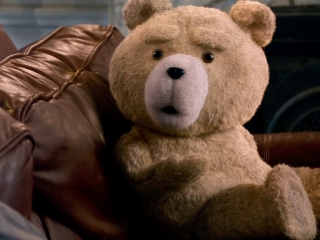
Ted 2 is what you would expect: a romping retread of the original movie. The gags keep coming, most with about as much subtlety & finesse as a wrecking ball. I am not sure if you make a racist joke in an ironic post modern way that it totally neutralises the racism; but make up your own mind.
The acting is probably understated as it cannot be easy being in dialogue with some blank space: certainly all the characters are convincing (apart from the baddie who just does not cut it for me - too creepy to be a pantomime villain and not creepy enough to be scary). This is a crude, lewd and daft movie that will (unless you take offence at such humour) keep you amused and give you a few laugh out loud moments.
The legal question at stake in the movie is whether being human is about genetics or behaviour. I won't spoil how the narrative resolves this, naturally. Suffice to say: the answer is not straightforward. And that reminds me of the old apocryphal statement in a manager's appraisal: this person is not yet a born leader.
I regularly work with classes of 9, 10 and 11 year olds and I am always struck by the differences within the groups as to who puts their hand up to risk an answer to my questions... and who does not. Are the ones with their hands up the future leaders (or the quieter more contemplative ones)? But what strikes me more is the difference between schools and indeed classes within the same school: the teachers have so much influence on their pupils. In some places, most of the children are bursting with answers, comments and insights. In other places, they are not but for a few members of the class. So in the appraisal comment above, does that say more about the manager concerned... or the person conducting the appraisal (presumably the manager's manager...)???
How do you create born leaders?
______________________
This is the Blog 103 in my 2014/2015 series of blogs about leadership ideas to be found in the movies of our time. You can read here as why I began doing this (with an update at the end of 2014). Please subscribe to this blog if you want to read more. Thanks. Click the label 'film' to see all the others.
Saturday, 11 July 2015
Back to Black
Amy was a difficult film to watch, as I knew how the film would end and spent some time hoping it could end in another way. In a way it does (and I won't say how) but it is still not a happy film. But it is an interesting, fascinating and uplifting film since although her life ended far too soon, she has left a legacy of some wonderful music that will always live on.
The movie is very cleverly made, splicing together film of her from home movies, mobile phone clips and excerpts from TV shows, overlaid with friends, colleagues and family talking about her and what happened in her life. This film honours Amy Winehouse and is wholly sympathetic towards her, in my opinion. A poignant movie to see.
This is a film about addiction to alcohol, other substances, being slim and even love. I think we all have the capacity to become addicted to things that make us feel good. Most of us fortunately manage to keep such addictions in check.
But let's be clear, addictions start with reward - and indeed the reward does not even have to happen every time. (Psychological learning theory suggests that random intermittent reward leads to behaviour that is the most difficult to 'extinguish' - or stop). Can leaders get addicted to behaviours that are not healthy in the mistaken belief that they are rewarding? Undoubtedly. It is vital to know the difference between healthy behaviours and those which are not so...
How do you know - really know?
______________________
This is the Blog 102 in my 2014/2015 series of blogs about leadership ideas to be found in the movies of our time. You can read here as why I began doing this (with an update at the end of 2014). Please subscribe to this blog if you want to read more. Thanks. Click the label 'film' to see all the others.
Subscribe to:
Posts (Atom)